
The Grip: the Pick Between Your Fingers
The grip is the first point of contact between the musician and the pick. Ergonomics, Grip, shape and geometry determine how the pick is held, influencing comfort, control and fatigue while playing. Understanding these aspects means understanding how the design of a pick can help make the playing motion more natural, allowing the musician to focus entirely on the music

Ergonomics
In a pick, ergonomics describes how its shape, dimensions and surface interact with the musician's hand while playing. The goal of ergonomics is to promote a natural, stable and comfortable grip while reducing the effort required to maintain control of the pick.
Good ergonomics improve movement precision, grip consistency and overall comfort during performance, helping to reduce fatigue in the fingers, hand, wrist and forearm, especially during practice sessions or extended playing.
Ergonomics does not directly determine the sound produced by the pick, but it influences the way the musician interacts with it. A more secure and natural grip allows the player to focus more on technique and expression, reducing the need to compensate for an unstable or uncomfortable grip

Grip
In a pick, Grip refers to the ability of its surface to provide a stable and secure hold between the musician's fingers, minimizing slipping during performance without requiring greater gripping force.
Grip primarily depends on the characteristics of the pick's surface. It can be achieved through a specific texture—a deliberately non-smooth finish—or through raised patterns, engravings, holes or other design features intended to increase friction between the fingers and the pick.
An effective Grip improves grip stability, reduces unwanted pick rotation and helps maintain more consistent control while playing, while also contributing to reduced hand fatigue.
Grip should not be confused with ergonomics. While Grip mainly concerns the adhesion between the fingers and the pick's surface, ergonomics encompasses all the design features that determine the comfort and natural feel of the grip
Shape and Size
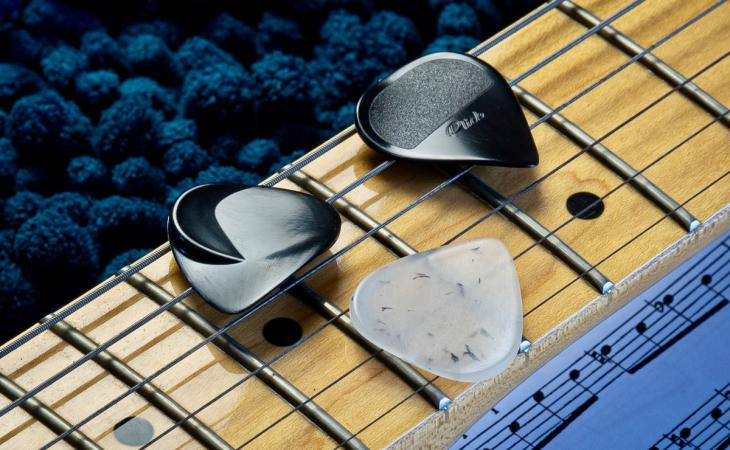
n a pick, shape and size are two of the primary design features, as they influence both the way the musician holds the pick and the way it subsequently interacts with the string.
Throughout history, countless pick shapes have been developed. The most common is the traditional teardrop shape, but triangular, rounded triangular, equilateral and many other variations also exist. Even the earliest manufacturers' catalogues featured dozens of different geometries, each designed to meet specific playing requirements.
Size can also vary considerably. A larger pick generally provides a greater contact area for the fingers, while a smaller one can promote faster movements and greater precision. Shape and size therefore determine how the pick is held, the stability of the grip, the area available for string contact and, consequently, its behaviour during performance.
Shape and size alone do not define the quality of a pick. Their effect depends on the overall design, which also includes ergonomics, materials, thickness and tip geometry
Body Twist
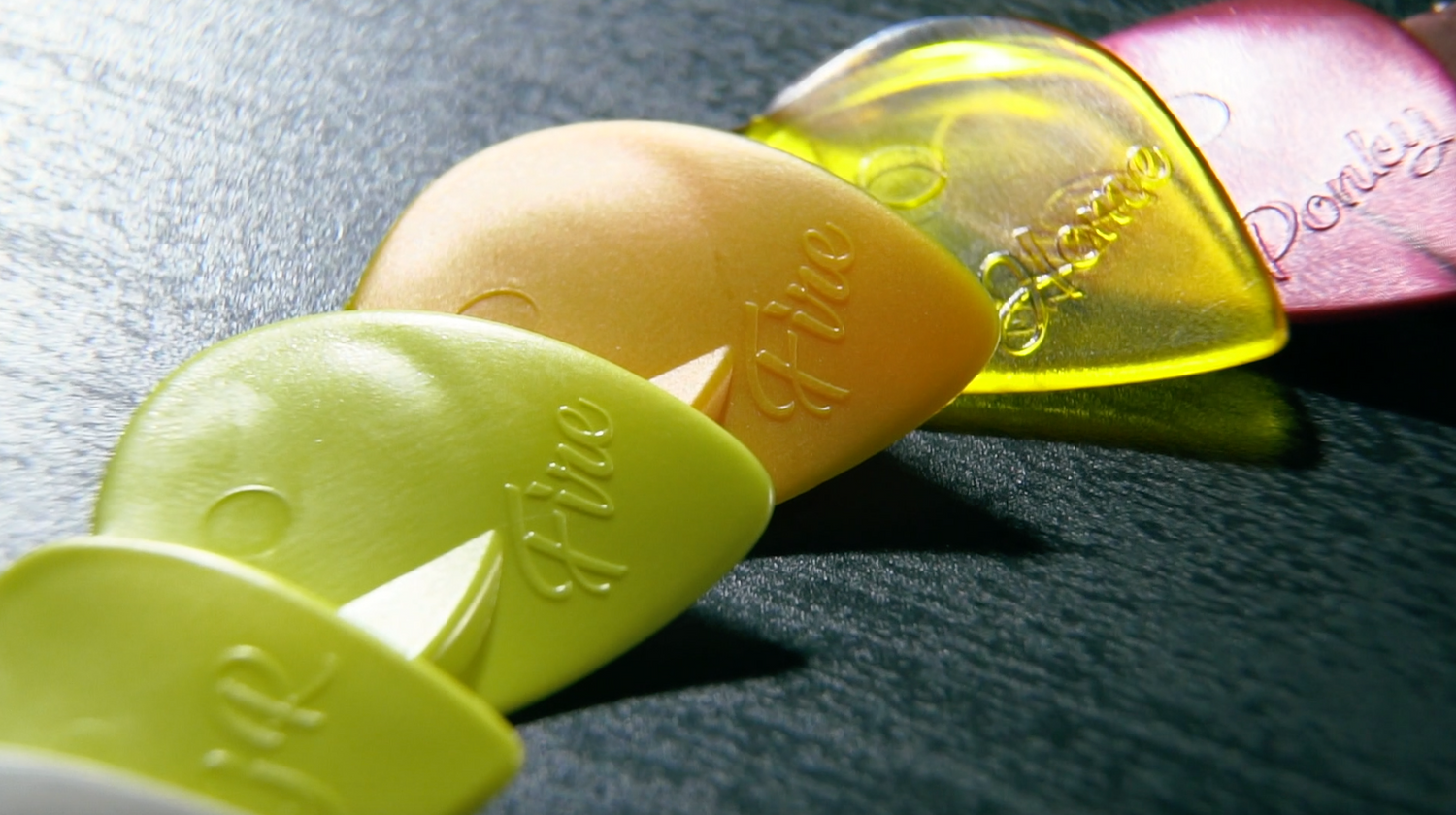
In Plick the Pick picks, Body Twist is one of the defining design features.
Body Twist consists of a controlled rotation of part of the pick's surface relative to its main plane. This unique geometry creates a Helical Profile that changes both the way the pick is held and the way it interacts with the string.
From a grip perspective, the curvature generated by the Body Twist promotes a more natural contact between the fingers and the pick's surface, improving ergonomics, stability and control. The amount of twist and its distribution along the body of the pick are carefully defined during the design process according to the characteristics desired for each model.
The effects of Body Twist extend beyond the grip. The resulting Helical Profile also influences the behaviour of the pick during string contact, a topic explored further in the section dedicated to pick–string interaction.
Body Twist is not an aesthetic feature, but a deliberate engineering solution designed to integrate grip ergonomics with the dynamic behaviour of the pick during performance
Posture and Fatigue
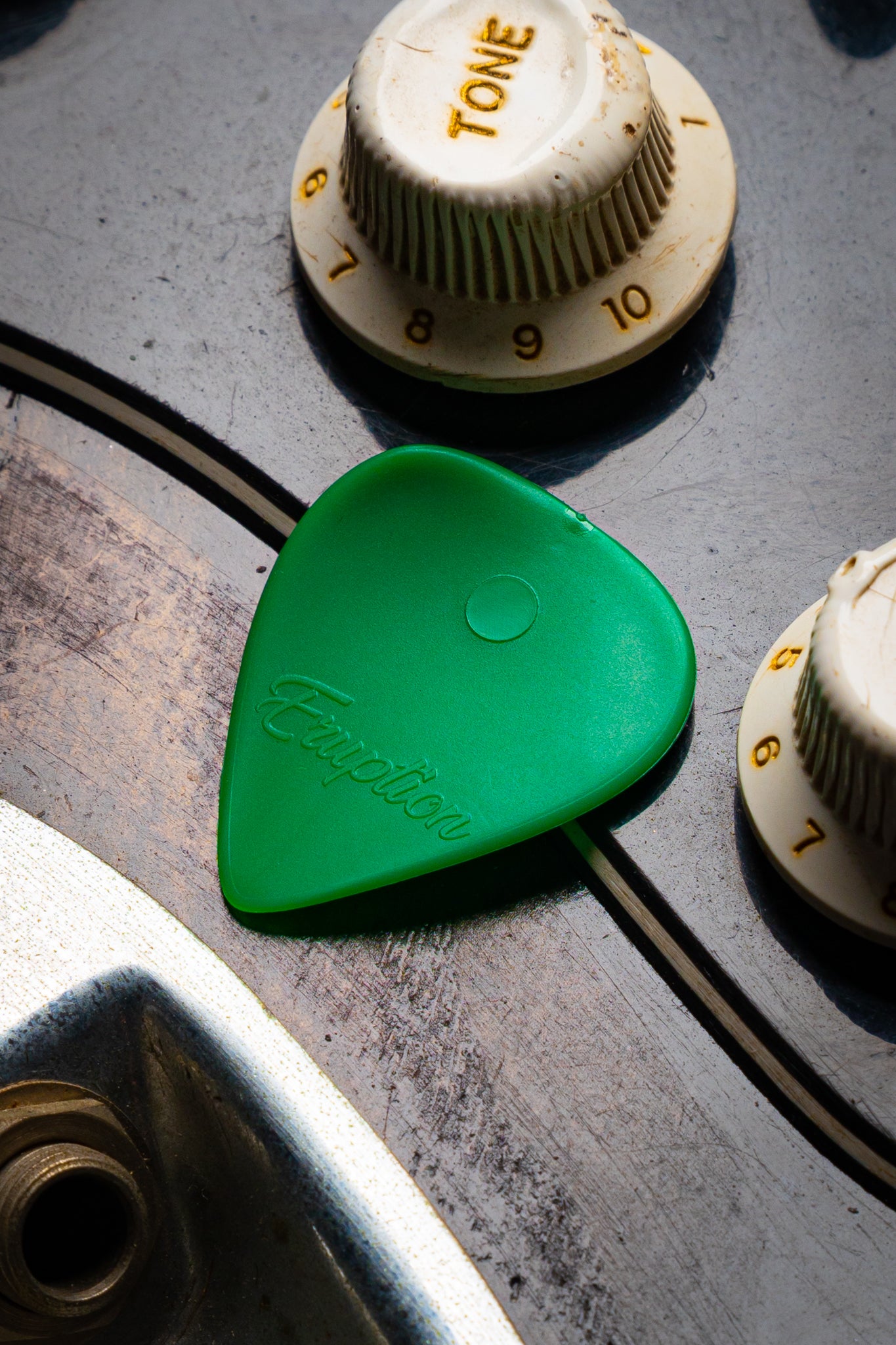
When using a pick, posture and fatigue are closely related to the way the hand interacts with the pick during performance. A natural and stable grip allows the fingers, hand and wrist to remain more relaxed, reducing the muscular compensation required to maintain control.
Posture depends on the combination of the pick's design features, including ergonomics, shape, size, Grip and, in Plick the Pick models, the curvature generated by the Body Twist. When these elements work together harmoniously, the musician can apply less gripping force while maintaining the same level of control.
Reducing the effort required to hold the pick helps minimise muscular fatigue during practice and extended playing sessions, allowing greater consistency while enabling the musician to focus more on technique and musical expression.
Posture and fatigue are not determined by a single feature of the pick, but are the result of the balance between all of its design characteristics
Un plettro ergonomico per ogni strumento
-

Picks for electric guitar
Find the perfect pick for your electric guitar: ergonomic, durable picks with...
-

Picks for acoustic guitar
Discover the ideal ergonomic picks for acoustic guitar: warm tone, comfort, and...
-

Picks for bass
Ergonomic bass picks with a curved profile for power, stability, and deep...
-

left handed picks
Ergonomic picks for left-handed players with a reversed curved profile to ensure...


